First Session
Location: Bethlehem Bible College
Date: Wednesday, 11/2/2026

Discussion Workshop titled
Sectarian and Religious Fanaticism and Its Impact on Social Peace


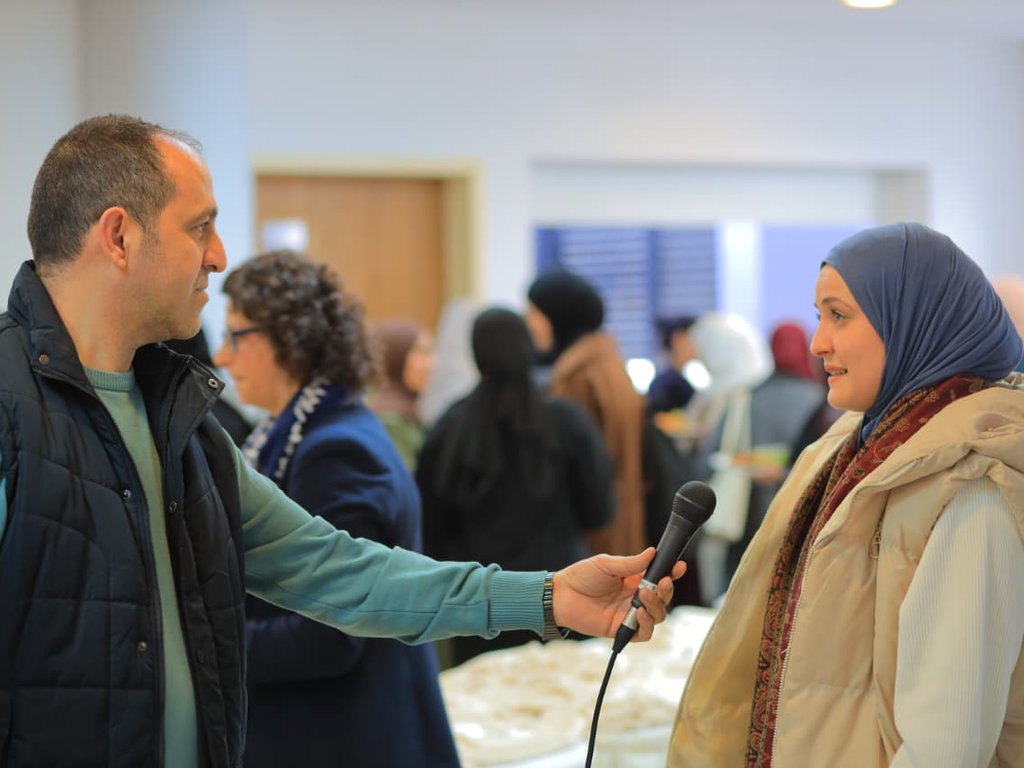

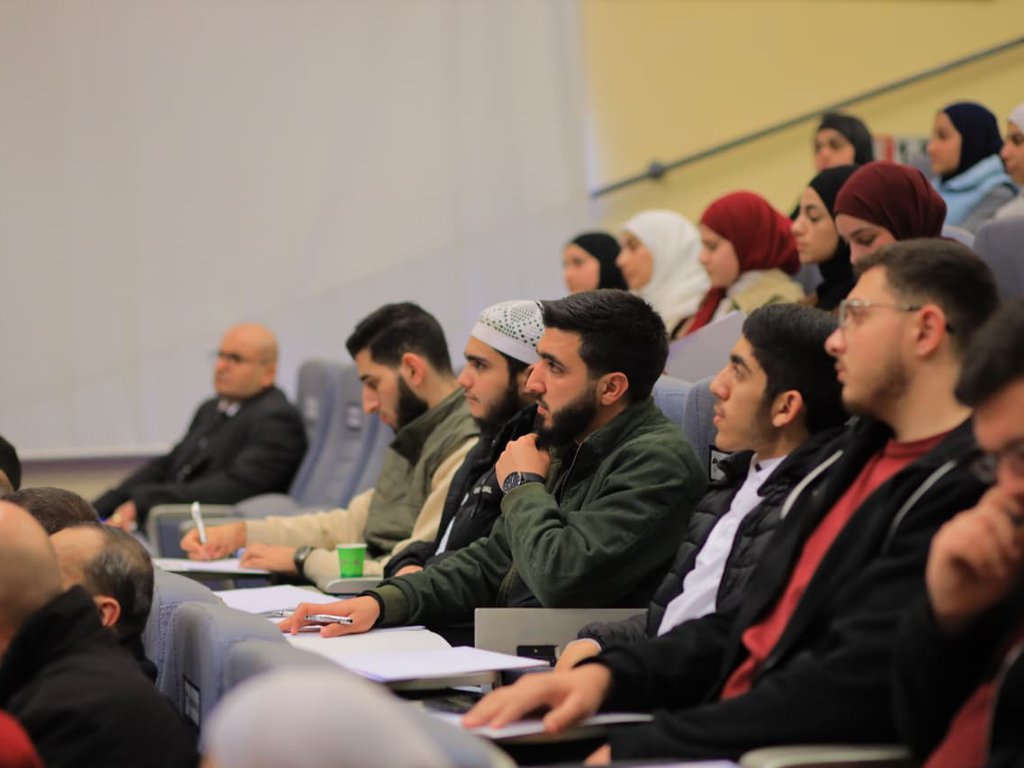
Speech by Dr. Munther Isaac
Dr. Munther Isaac presented his keynote speech in ten points, addressing a fundamental question:
?Why should we engage in Muslim–Christian dialogue in Palestine
He began by emphasizing the core of faith as reflected in the words of Jesus, which place believers before a clear ethical standard. When Jesus was asked about the greatest commandment, he replied: to love the Lord your God with all your heart, soul, mind, and strength, and to love your neighbor as yourself.
This teaching establishes love of God and love of neighbor as inseparable principles. From this foundation, Dr. Isaac outlined ten key truths:
First: Muslims and Christians do not worship two different gods; there is one God. While theological understandings differ, both communities share equal human dignity and value, and are united in humanity.
Second: Theological differences are not a barrier to dialogue but a motivation for it, encouraging engagement rather than avoidance.
Third: The absence of dialogue does not create neutrality but fosters division, misunderstanding, and fear. Therefore, understanding the “other” should come directly from engagement, not from external narratives.
Fourth: Respect and openness do not weaken identity but strengthen it, as genuine faith is reflected in behavior rather than slogans.
Fifth: In Palestine, Christians and Muslims live side by side in the same cities, schools, and institutions. Drawing on the parable of the Good Samaritan, Dr. Isaac emphasized that “the neighbor” is defined by ethical action, not shared identity. He also affirmed that Palestinian Christians are indigenous to the land, not newcomers.
Sixth: Both communities face a shared existential threat, as the occupation represents a system of displacement and replacement.
Seventh: Maintaining unity is essential, as external powers often seek to frame the conflict as a religious one in order to deepen division.
Eighth: He warned against certain theological narratives that attempt to spiritualize the political situation in ways that justify or normalize injustice. He emphasized the need to distinguish between interfaith dialogue and political exploitation of religion.
Ninth: Religious extremism is a common threat to all communities, as it produces destruction rather than coexistence, and its consequences affect all sides.
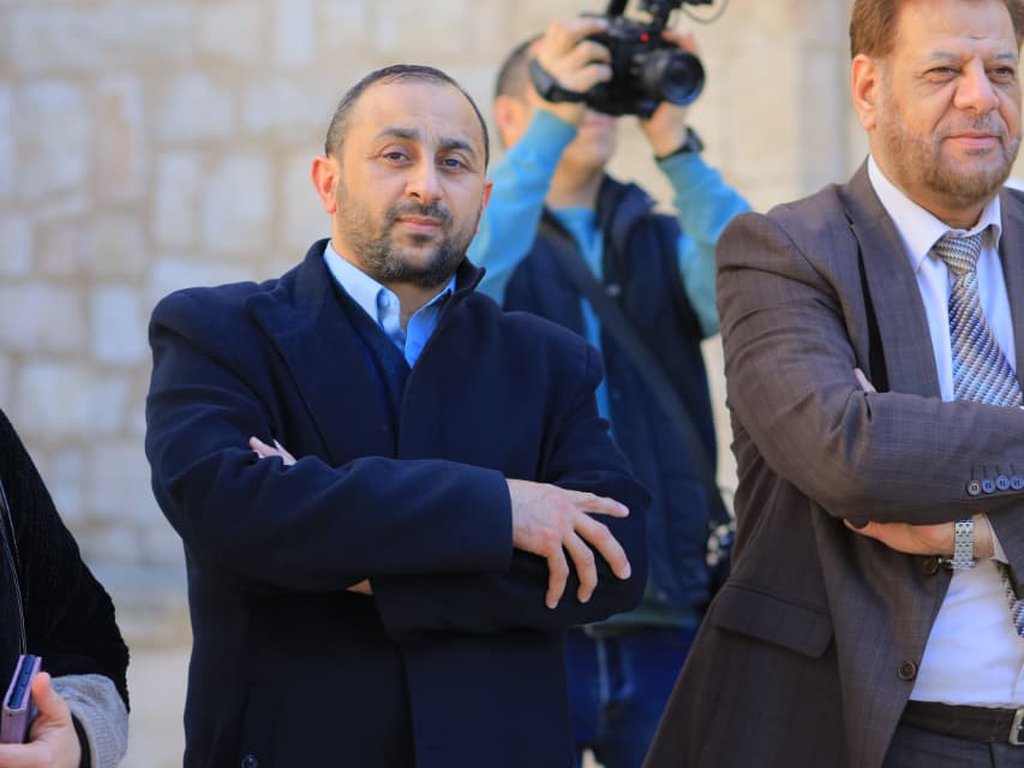
Tenth: Christianity is fundamentally defined by love, as stated in the biblical teaching that “God is love.” Failure to practice love contradicts the essence of the Gospel, while loving one’s neighbor brings believers closer to its core message. Dr. Isaac concluded with a powerful statement: “We are not merely obliged to live together; we are called to live together under the oneness of God.” Following this, Prof. Dr. Jamal Zaid Al-Kilani welcomed the audience, opening his remarks by stating: “Our presence as students in this space is itself a success of the idea of dialogue and communication.” He continued the discussion from Dr. Isaac’s final point, focusing on the theme of religious extremism and intolerance.
Speech by Prof. Dr. Jamal Zaid Al-Kilani
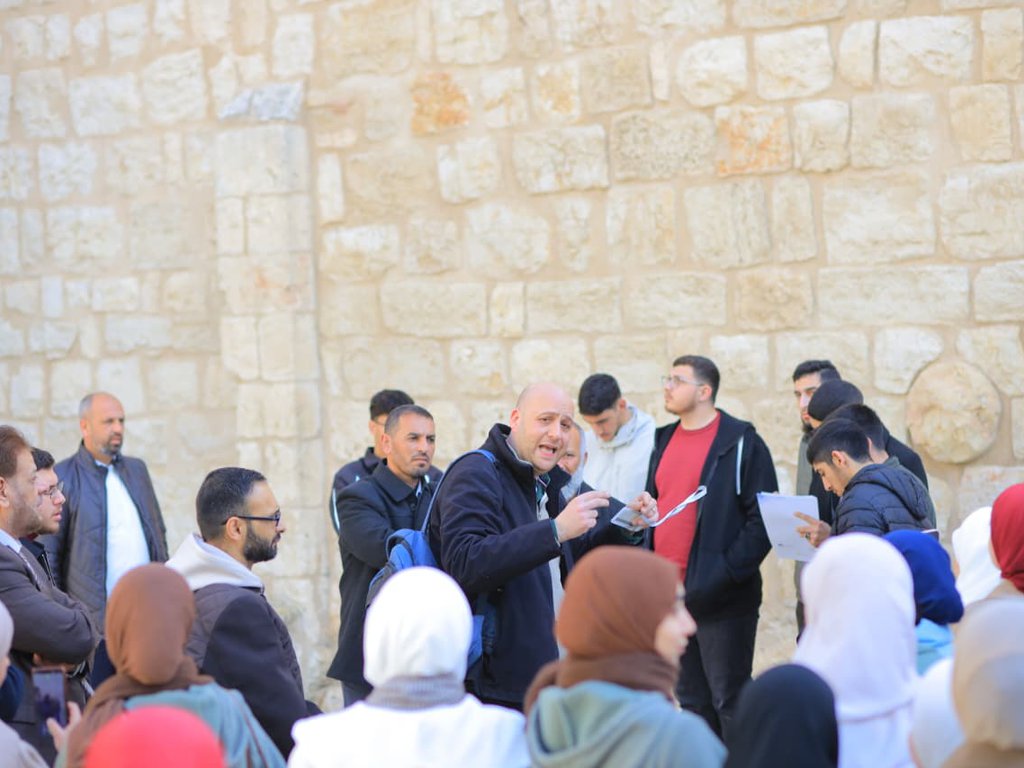
Field Visit to the Church of the Nativity:
Accompanied by Mr. Hitham Daiq, a delegation from the An-Najah Center for Religious Studies (ANCERS) conducted a field tour in the Old City, which included a visit to the Church of the Nativity.
During the visit, the delegation explored the church and its various sections, receiving a detailed explanation of its key historical and religious landmarks, as well as the cultural and heritage symbols and elements it contains. This provided the delegation with an opportunity to gain a deeper understanding of the church’s religious and civilizational significance and to enhance scholarly and interfaith dialogue between the parties.